
IEC62133 Approved 451730 3.7V 210mAh Lithium Ion Polymer Battery
Source this high-capacity prismatic lithium battery from expert lithium ion battery manufacturers. Reliable power with IEC62133 and UN38.3 safety certification.
View product
Topwell's 21700 lifepo4 battery cell programme centres on the IFR21700-3000mAh (item TWE0501): a 3.2V nominal cylindrical cell rated 3000mAh at 0.2C discharge, measuring 21.7(±0.2) × 70.8(±0.2) mm and weighing roughly 63 g. Because the ifr21700 3000mah lifepo4 cell holds a 9A continuous and 15A peak discharge ceiling, ≤25 mΩ internal resistance and ≥2000 cycles to 80% capacity, it gives pack builders repeatable current headroom, clean 4S/8S/16S string math and a documented −20~60°C discharge window.

Single source of truth
Every figure below is taken from the IFR21700 product page. Treat this table as the reference sheet when you compare this cell against another 21700 candidate, write a pack specification, or check a quotation line by line.

IFR21700, item TWE0501, in the 3.2V LiFePO4 cylindrical category.
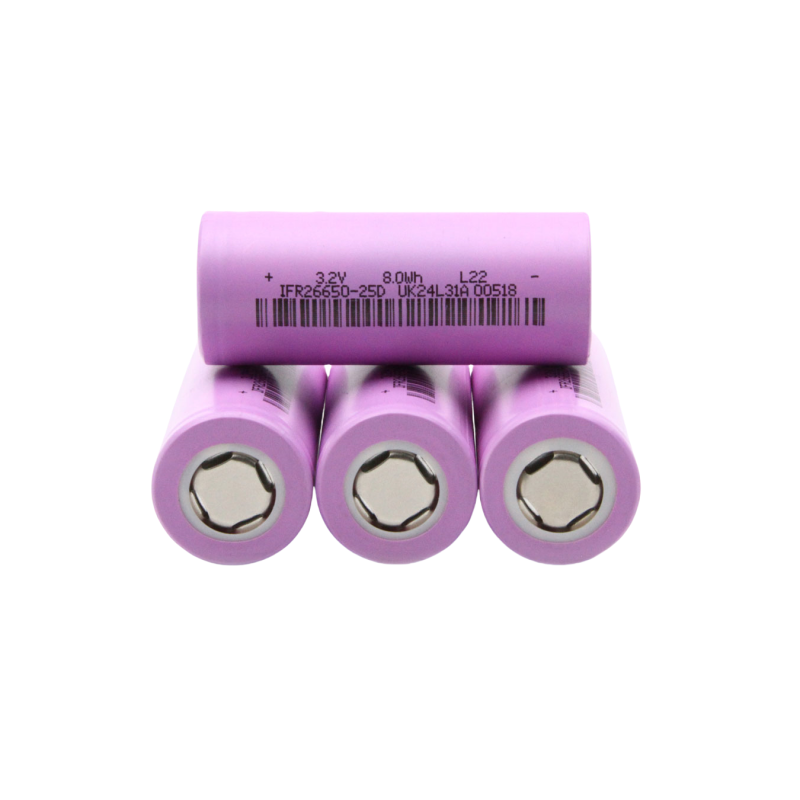
| Parameter | Specification | Remark |
|---|---|---|
| Model No. | IFR21700 | Item No. TWE0501 |
| Nominal voltage | 3.2V | LiFePO4 chemistry |
| Nominal capacity | 3000mAh | @0.2C discharge |
| Dimensions | 21.7(±0.2) × 70.8(±0.2) mm max | Diameter × height |
| Cycle life | ≥2000 times | Retaining ≥80% of initial capacity |
| Charge method | CC/CV with a dedicated lithium battery charger | Charge cut-off 3.6V |
| Discharge cut-off voltage | 2.0V | Per cell |
| Standard charge current | 600mA | Max continuous charge 3000mA |
| Standard discharge current | 600mA | Max continuous discharge 9A |
| Peak discharge current | 15A | Short-duration peaks only |
| Internal resistance | ≤25 mΩ | Fresh cell |
| Weight | Approx. 63 g | Per cell |
| Operating ambient temperature | Charge 0~50°C, discharge −20~60°C | Recommended range |
| Storage temperature | −20~25°C (12 months); −20~35°C (3 months); −20~45°C (1 month) | Tiered by duration |
| Certificates | CE, CB, IEC62133, UL, PSE, RoHS, REACH, UN38.3, MSDS | Safety, environmental and transport |
| Management systems | ISO9001, ISO14001, BSCI | Quality and environmental management |
| Warranty | 1 year | As stated on the product page |
Transport documentation is supplied as UN38.3, MSDS and air/sea transport identification and classification reports. Confirm current certificate versions and destination-specific requirements when you place an order.
Mechanical fit
IFR21700 uses the familiar 21700 can format, so the mechanical question is rarely “does it fit at all” and almost always “how much clearance do I leave”. The ±0.2 mm tolerance applies to both the diameter and the max height.

21.7(±0.2) mm diameter, 70.8(±0.2) mm max height, approx. 63 g.
| Planning item | IFR21700 data | Design implication |
|---|---|---|
| Cell diameter | 21.7 mm (±0.2) | Holder wells and cavities should clear the worst-case 21.9 mm |
| Cell height | 70.8 mm max (±0.2) | Add height above the can for tabs, nickel strip, insulation and busbar |
| Cell weight | Approx. 63 g | 4S1P ≈ 252 g and 16S1P ≈ 1.01 kg of cells, before BMS and enclosure |
| Single-row 4S length | 4 × 21.7 mm = 86.8 mm | Minimum block length with no spacers, holders or end plates |
| Tolerance stack-up | ±0.2 mm on diameter and height | Apply the tolerance to each cell in tightly stacked or press-fit cavities |
Length, width and height of a finished block depend on cells per row plus holder walls, insulation paper, busbar thickness and the enclosure shell. Weight and length figures above are straightforward arithmetic on the published 63 g and 21.7 mm values.
Thermal envelope
Two temperature tables matter in a real project: the operating window that decides whether the pack can run, and the storage tiers that decide how long it can sit on a shelf without losing capacity.
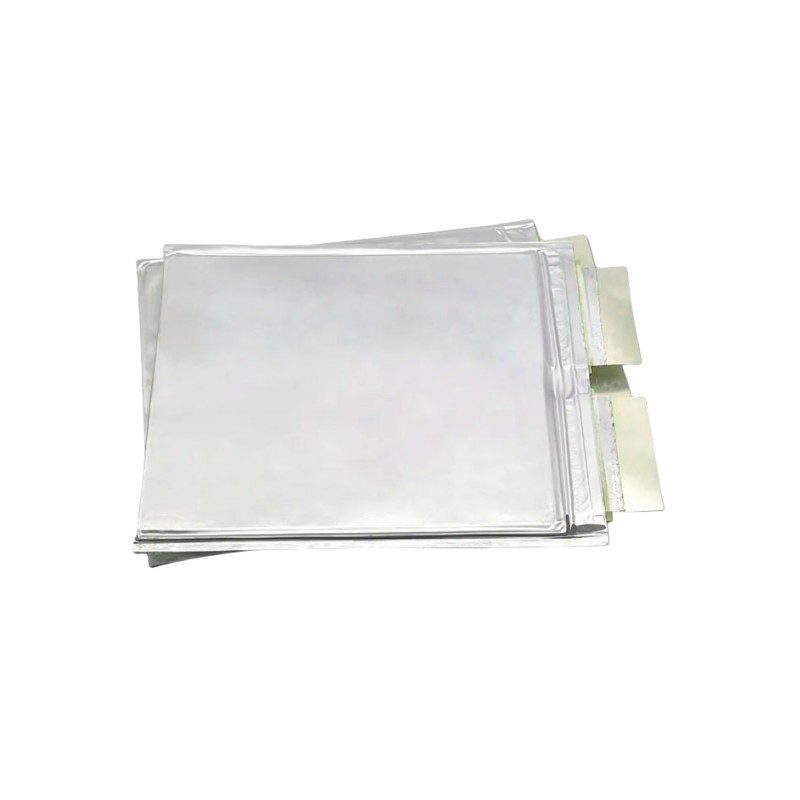
Recommended ranges as published for the IFR21700 cell.
| Condition | Recommended range |
|---|---|
| Charging | 0~50°C |
| Discharging | −20~60°C |
| Storage up to 12 months | −20~25°C |
| Storage up to 3 months | −20~35°C |
| Storage up to 1 month | −20~45°C |
Configuration math
Move from one cell to a finished pack configuration without recalculating each column. Voltage follows series count, capacity and current ceiling follow parallel count, and energy is the product of the two.
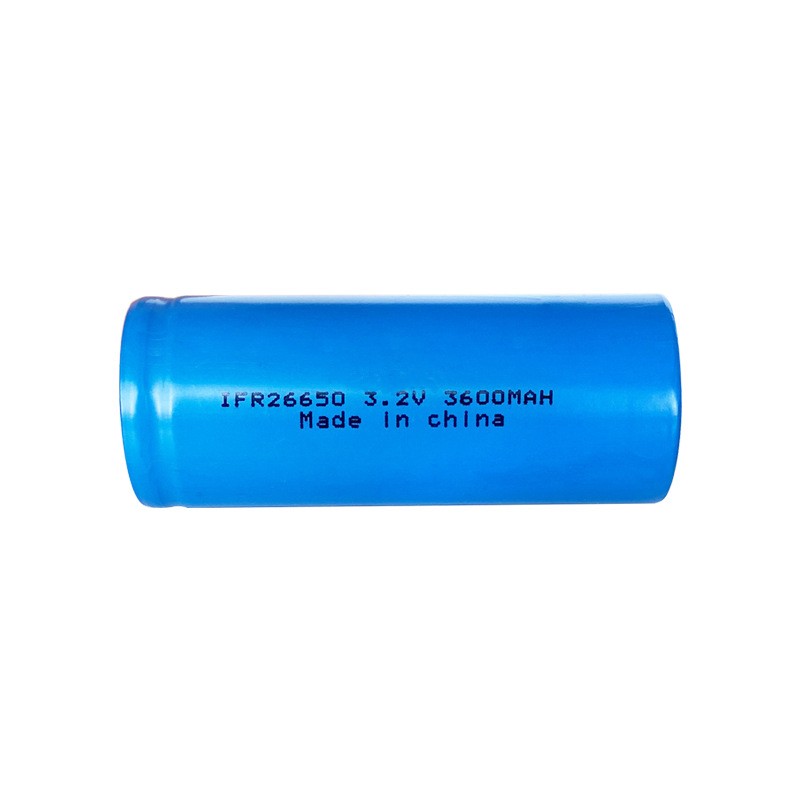
Strings scale by series count; current ceiling scales by parallel count.
| Configuration | Nominal voltage | Pack capacity | Approx. energy | Continuous | Peak |
|---|---|---|---|---|---|
| 4S1P | 12.8V | 3.0Ah | 38.4Wh | 9A | 15A |
| 8S1P | 25.6V | 3.0Ah | 76.8Wh | 9A | 15A |
| 16S1P | 51.2V | 3.0Ah | 153.6Wh | 9A | 15A |
| 4S2P | 12.8V | 6.0Ah | 76.8Wh | 18A | 30A |
| 8S2P | 25.6V | 6.0Ah | 153.6Wh | 18A | 30A |
| 16S2P | 51.2V | 6.0Ah | 307.2Wh | 18A | 30A |
| 16S4P | 51.2V | 12.0Ah | 614.4Wh | 36A | 60A |
Formulas: pack voltage = 3.2V × S · pack capacity = 3.0Ah × P · pack energy = voltage × capacity · discharge ceiling = 9A × P continuous and 15A × P peak. Cell-level values are taken from the IFR21700 product page; pack current assumes matched cells, balanced parallel strings and adequate wiring, and should be derated for temperature and connection losses.
Production and test evidence
Two claims carry most of the weight when qualifying a cell supplier: how consistently the cells are built, and what is verified before they leave the line. The IFR21700 page documents both.
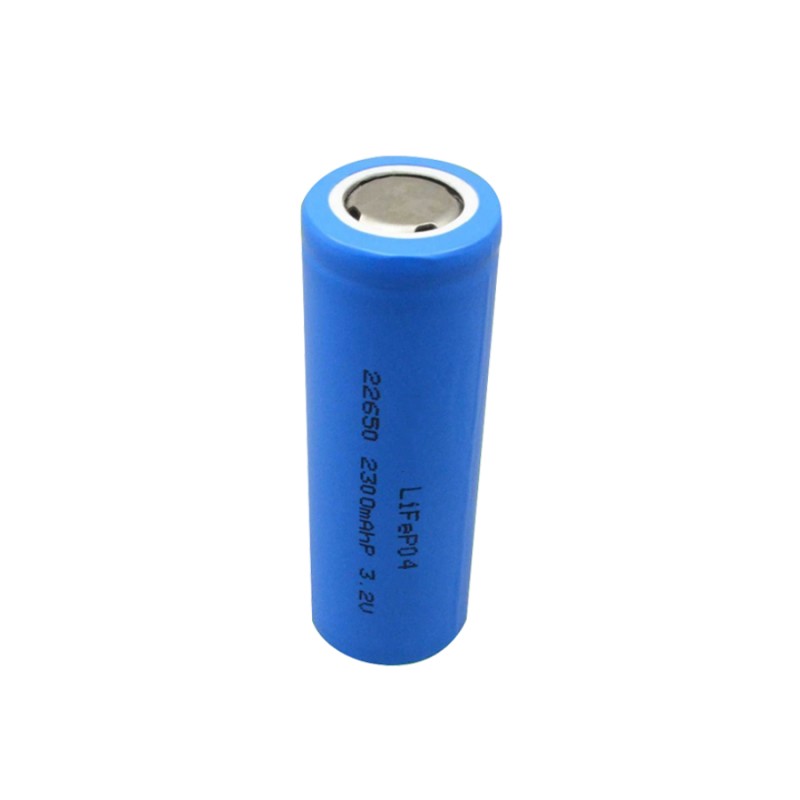
Twelve documented production steps from electrode mixing to outbound quality control.
The supplier reports two decades in the battery field and ships by sea, air and express from Shenzhen, Shanghai and Hong Kong with dangerous-goods documentation such as UN38.3 and MSDS.
Application decisions
Each card below pairs an application the supplier lists for this cell family with the specific published figure that governs the decision, and the check a buyer should run before committing to a pack design.
The “spec fact” is a published IFR21700 value. The “buyer decision” is the engineering or commercial checkpoint that follows from it — string count, parallel count, thermal handling or storage policy.
Spec fact3.2V nominal with a −20~60°C discharge window.
Buyer decisionMatch the string to the LED driver input window and confirm the all-night continuous draw stays inside 9A per cell.
Spec fact≥2000 cycles to 80% capacity, associated with an 8–10 year use life.
Buyer decisionBuy on cost per cycle rather than peak power, and align inverter and BMS cut-offs with 3.6V / 2.0V per cell.
Spec fact15A peak discharge per cell on top of 9A continuous.
Buyer decisionSize the parallel count so acceleration and hill-start inrush stay below 15A × P, and verify the controller’s peak demand.
Spec fact≤25 mΩ internal resistance with capacity, voltage and resistance sorting in production.
Buyer decisionInsist on matched parallel strings, and confirm the float-voltage window sits comfortably under the 3.6V charge cut-off per cell.
Spec fact9A continuous and 15A peak discharge; 3000mA maximum continuous charge.
Buyer decisionMeasure the tool’s stall and start-up current first, then choose 2P or 4P so the peak ceiling covers it with margin.
Spec factApprox. 63 g per cell at 3000mAh and 3.2V.
Buyer decisionRun the weight and runtime budget early: 3.0Ah × P per string, with cell weight multiplied across the whole pack.
Send your target voltage, capacity, continuous and peak current, enclosure dimensions and operating temperature range. Topwell supports OEM/ODM projects, sample evaluation for pilot builds and bulk orders, and can provide the product information PDF, certification documentation and dangerous-goods transport paperwork with your quotation.
Keep adjacent product options together for a faster catalog comparison.
Source this high-capacity prismatic lithium battery from expert lithium ion battery manufacturers. Reliable power with IEC62133 and UN38.3 safety certification.
View product
3.7v lithium ion battery solutions for IoT and industrial systems. Partner with a reliable lithium ion battery supplier for high capacity battery needs.
View product
5000mAh 3.7v capacity 3.7v lithium ion battery with integrated PCM. Reliable lithium ion battery supplier providing certified power for professional industrial use.
View productifr21700 (item twe0501) is a 3.2v nominal lifepo4 cylindrical cell rated 3000mah at 0.2c discharge, measuring 21.7(±0.2) × 70.8(±0.2) mm and weighing approximately 63 g.
standard discharge is 600ma, the maximum continuous discharge current is 9a and the peak discharge current is 15a, with internal resistance of ≤25 mω. pack-level current capability scales with the number of parallel cells.
with a 3.2v nominal cell, a 4s string gives 12.8v nominal, an 8s string 25.6v and a 16s string 51.2v. using a 3.6v charge cut-off and a 2.0v discharge cut-off, a 4s pack charges to 14.4v and discharges to 8.0v.
charging is recommended from 0~50°c and discharging from −20~60°c. storage is −20~25°c for up to 12 months, −20~35°c for up to 3 months and −20~45°c for up to 1 month.
cycle life is ≥2000 cycles while retaining at least 80% of initial capacity, which the product page associates with an 8–10 year use life in suitable applications.
the cell is listed with ce, cb, iec62133, ul, pse, rohs, reach, un38.3 and msds documentation, plus iso9001, iso14001 and bsci quality and environmental management, and a 1-year warranty. every cell is tested for 3 cycles and receives a 100% full test on appearance, voltage, capacity, resistance and size.

